
What is Histamine and how does it affect your body?
Histamine reactions after eating are usually caused by a mismatch between the histamine in your food and your body's ability to break it down. The enzyme diamine oxidase (DAO) normally degrades histamine in your gut. When DAO is low or blocked, histamine builds up and triggers symptoms like sneezing, flushing, headaches, and digestive upset — a condition called histamine intolerance. Replenishing DAO with a supplement such as Histamine Digest may help you eat the foods you love with fewer reactions.*
Replenish your DAO enzyme with Histamine Digest.
Shop Best SellersWhat is histamine?
Histamine sends red-flag messages to your immune system, prompting your white blood cells to rally against potential attackers infecting your tissues. Many common, tasty, nutritious foods contain histamine — and just as many foods trigger the release of histamine inside your body.
Normally, your small intestine comes to the rescue. It's stocked with the powerful enzyme diamine oxidase (DAO), which breaks down and helps eliminate histamine to maintain your biochemical balance and prevent uncomfortable reactions. When your DAO levels are low, or its activity is blocked, you may find yourself fighting a histamine overload.
What causes histamine intolerance?
A number of factors influence your DAO levels and activity:
- Genetics — some people are naturally predisposed to DAO deficiency.
- Age — evidence suggests both DAO levels and activity decline as we get older.
- Diet — alcoholic beverages and fermented or aged foods are high in histamine and can overwhelm an otherwise balanced system.
- Medications — many over-the-counter and prescription drugs block DAO activity.
- Gut health — because DAO is produced in the small intestine, digestive conditions can reduce its availability.
Research published in The American Journal of Clinical Nutrition suggests roughly 1% of people have histamine intolerance, and about 80% of them are middle-aged. This imbalance has inspired research for decades — some of which has led to the development of OmneDiem® Histamine Digest, a naturally derived enzyme supplement that replenishes your DAO levels so you don't have to give up the foods you love.
How do you know if you have DAO deficiency or histamine intolerance (HIT)?
Beyond the common skin flushing, histamine rash, stuffy or sneezy nose, watery eyes and churning gut, symptoms of DAO enzyme imbalance vary widely and may include:
- Brain fog
- Bloating
- Wheezing
- Eczema
- Fatigue, anxiety and irritability
- Hormone imbalances
- Low blood pressure
- Migraines
- Nausea
- Racing heart
If these tend to strike after you eat certain high-histamine foods, you may have a histamine intolerance or DAO deficiency.*
Read more about recognizing histamine intolerance.
What foods are high in histamine?
It's hard to predict exactly which foods will affect you until you eat them, but these are commonly high in histamine:
- Alcohol — especially wine; Champagne can contain around 670 mg of histamine per liter
- Canned, dried or salted seafood — sardines, mackerel, tuna, anchovies
- Aged cheese — Parmesan can reach ~2,500 mg/kg; fresh cream and cottage cheeses are much lower
- Aged and smoked meats — bacon, smoked salmon, ham and salami (up to ~654 mg/kg)
- Leftovers — reheated leftovers and meal-prep dishes climb in histamine as they sit
- Chocolate and some spices — anise, cinnamon, clove, curry, cayenne, nutmeg
- Fermented foods — kefir, kimchi, yogurt, and especially sauerkraut (~229 mg/kg)
- Certain legumes — soy, green peas and sweet peas are culprits; safer picks include lima, pinto, white, navy and black beans, black-eyed peas, lentils and chickpeas
- Certain nuts — walnuts, cashews, peanuts
- Certain vegetables — spinach, avocado, eggplant, tomato, mushrooms
- Certain fruits — pineapple, papaya, strawberries, bananas
- Vinegary foods — pickles, mayonnaise, olives
- Shellfish & crustaceans — squid, mussels, shrimp, crab, prawns
Want the full breakdown? See our guide to foods high in histamine.
What foods are histamine liberators?
- Most citrus fruits, strawberries and other berries, tomatoes
- Walnuts and cashews
- Chocolate and cocoa
- Tomatoes, tomato juice, ketchup
- Additives — azo dyes and some preservatives
- Alcoholic beverages of all kinds
Elimination diets can reduce your histamine load, but they're difficult to build and maintain — and often only marginally effective. Supplementing with OmneDiem Histamine Digest may support a low-histamine diet and help many people avoid strict dietary restrictions altogether.
What foods help lower histamine naturally?
- Fruits & vegetables — apples, broccoli, lettuce, garlic and onions can help reduce inflammation
- Hot peppers — capsaicin acts like a natural decongestant
- Eucalyptus oil — can help relieve stuffy mucous membranes (try a diffuser with black pepper oil)
- Green tea — a potent antioxidant; the Japanese "benifuuki" variety has been shown to inhibit mast-cell activation
- Raw local honey — regional pollen may help build tolerance to seasonal allergens
These foods can help, but they don't fix the underlying enzyme gap. Rather than eliminating foods you love, many people manage their imbalance by supplementing DAO daily.
How does a DAO enzyme supplement help?
You don't have to give up the healthy, tasty foods you love — or the nutrition they provide. Histamine Digest's patented DAO enzyme has been clinically tested and shown to break down food-derived histamine in the digestive tract. It is not absorbed and has no systemic activity — meaning it stays in your gut where it belongs, doing its job right where histamine enters your body.
Shop OmneDiem® Best Sellers
Clinically studied DAO enzyme support in the format that fits your life.
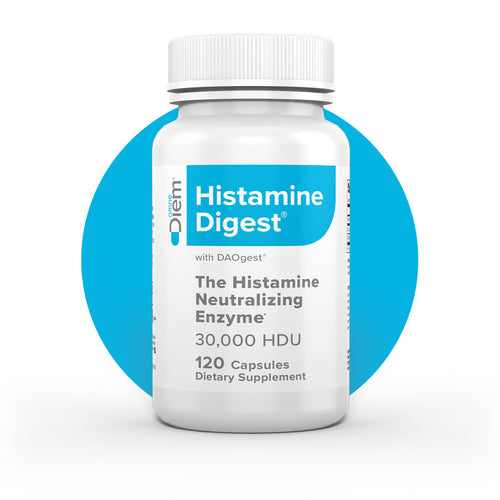
Histamine Digest — "The Original"
30,000 HDU DAO enzyme. Our flagship for food-related histamine intolerance.
From $55.95 $59.95
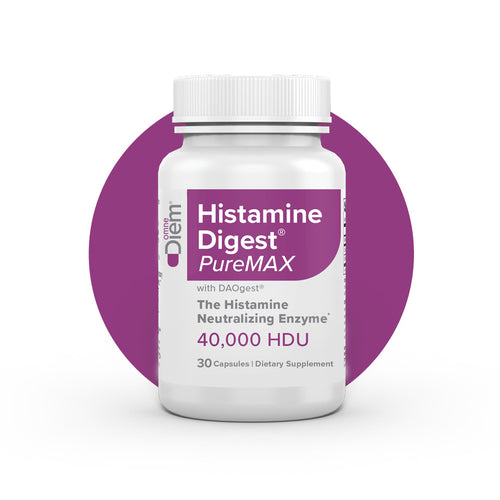
Histamine Digest PureMAX
Highest potency 40,000 HDU DAO for stronger histamine support.
From $29.95 $34.95
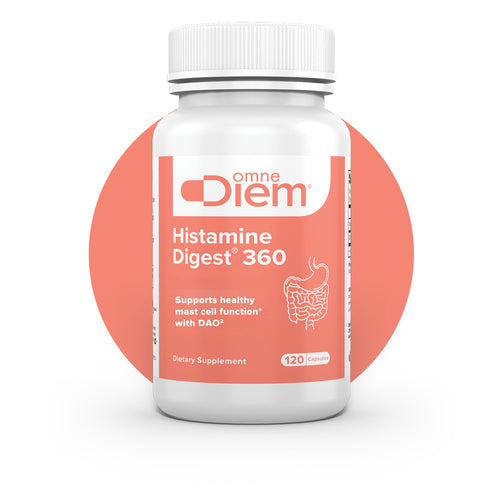
Histamine Digest 360
Mast-cell support with DAO + P5P vitamin B6, 120 DR capsules.
$89.95 $119.99
Disclaimer: These statements have not been evaluated by the Food and Drug Administration. These products are not intended to diagnose, treat, cure, or prevent any disease.
Get on with the party
It's time to quit being the party pooper. Instead of spending your energy itching, sneezing, and rubbing your stomach — then recovering afterward — you can rebalance your DAO enzyme levels and still enjoy all the gustatory bounty life has to offer. Repair your gut's histamine defense, and get back to the good stuff.
Ready to eat the foods you love again? Start with Histamine Digest.
Order TodayFAQ
What is the difference between a food allergy and histamine intolerance?
A food allergy is an immune reaction to a specific protein and can be severe. Histamine intolerance isn't a true allergy — it's a buildup of histamine that your body can't break down quickly enough, usually due to low DAO activity. Symptoms often mimic allergies but stem from an enzyme gap rather than an immune trigger.
Are peas high in histamine?
Green peas and sweet peas are considered higher-histamine legumes and can be liberators for sensitive people. Lower-histamine bean options include lima, pinto, white, navy and black beans, black-eyed peas, lentils and chickpeas.
Does a DAO supplement get absorbed into my bloodstream?
No. OmneDiem® Histamine Digest is designed to work only in the digestive tract. It is not absorbed and has no systemic activity, so it breaks down food-derived histamine right where it enters your body — in the gut.
Do I still need a low-histamine diet if I take Histamine Digest?
Many people find that supplementing DAO lets them relax strict dietary restrictions. Histamine Digest supports a low-histamine diet and can help you enjoy higher-histamine foods with fewer reactions, though everyone's tolerance is different.
When should I take a DAO enzyme supplement?
DAO supplements are typically taken shortly before eating a meal that contains histamine, so the enzyme is active in your gut as food arrives. Follow the directions on your specific OmneDiem® product.
DSHEA Disclaimer: These statements have not been evaluated by the Food and Drug Administration. This product is not intended to diagnose, treat, cure, or prevent any disease. OmneDiem® products are dietary supplements, not drugs. The information in this article is provided for educational purposes only and is not a substitute for advice from a qualified healthcare provider. Always consult your physician or pharmacist before starting any supplement, especially if you are pregnant, nursing, taking medication, or managing a medical condition.
*These statements have not been evaluated by the Food and Drug Administration. This product is not intended to diagnose, treat, cure, or prevent any disease.