
What Foods and Drinks are High in Histamine?
High-Histamine Foods: The Complete List of What to Watch For
There are three distinct categories of food and drink that can affect histamine intolerance:
- Foods that naturally contain high levels of histamine (aged, fermented, cured, or leftover foods)
- Foods that liberate histamine from the body's own stores (many fruits, chocolate, some nuts)
- Substances that block the DAO enzyme, reducing your body's natural ability to clear histamine — with alcohol the biggest everyday culprit.*
Taking a DAO enzyme supplement before high-histamine meals supports your body's natural histamine breakdown in the gut.*
What foods are high in histamine?
Understanding histamine in food means looking at three mechanisms — not just one list. A food can raise your histamine load by bringing histamine in, by releasing histamine already stored in your body, or by disabling the enzyme that clears it. Here's how each category works.*
1High-histamine foods — they bring histamine in
These foods naturally contain elevated levels of histamine, primarily due to fermentation, aging, curing, or bacterial activity (e.g., in leftovers). The longer a food is aged or fermented, the higher its histamine content generally becomes.*
Fermented & aged foods:
- Aged and fermented cheeses — parmesan, blue cheese, cheddar, gouda, brie, camembert, and most hard cheeses
- Fermented vegetables — sauerkraut, kimchi, pickles
- Fermented soy products — soy sauce, tamari, miso, tempeh
- Fermented dairy — yogurt, kefir, sour cream, buttermilk
- Sourdough bread
- Vinegar-based condiments — ketchup, mustard, relish, vinaigrette-based salad dressings
Cured & processed meats: salami, pepperoni, prosciutto, bacon, deli meats, hot dogs, and smoked meats of all kinds.
Fish & seafood:
- Smoked fish — smoked salmon, mackerel, trout; canned fish — tuna, sardines, anchovies, herring
- Shellfish — shrimp, crab, lobster, clams
- Note: histamine in fish and seafood builds rapidly after catch — fresh fish handled and eaten promptly is generally lower in histamine than canned, smoked, or previously refrigerated fish.
Leftovers: cooked proteins of any kind — including chicken, beef, and fish — accumulate histamine as they sit in the refrigerator, even when properly stored. The older the leftovers, the higher the histamine content may be.*
For a deeper breakdown of specific foods and their histamine levels, see our full guide to foods high in histamine.
2Histamine-liberating foods — they release histamine already in the body
A histamine-releasing food doesn't contain much histamine inherently but can encourage the body to release its own stored histamine.* The histamine comes from within — from mast cells in the gut wall and surrounding tissues — rather than from the food directly. These foods can significantly increase the overall histamine load, even if they don't appear on a high-histamine list.*
- Strawberries, raspberries, and other berries
- Citrus fruits — oranges, lemons, limes, grapefruit
- Pineapple, papaya, and kiwi
- Tomatoes and tomato products — pasta sauce, pizza sauce, ketchup
- Avocado
- Chocolate and cocoa products
- Walnuts, cashews, and peanuts
- Egg whites
- Shellfish (they both contain histamine and may liberate it as well)
3DAO blockers — they reduce histamine breakdown
Some substances don't directly add histamine but reduce the body's ability to break it down by inhibiting DAO activity in the gut.* When DAO is blocked, histamine from food and drink accumulates more readily — even if the histamine load itself would otherwise be manageable.*
Alcohol is the most significant DAO blocker in everyday life. Alcoholic beverages — particularly red wine, craft beer, and champagne — are uniquely problematic because they occupy all three categories at once: they contain histamine from fermentation, they directly inhibit DAO enzyme activity, and alcohol is broken down into acetaldehyde, a compound that may encourage histamine release from mast cells in the gut wall.* This triple effect is why many people find wine or beer is a particularly consistent trigger.* Learn more in our article on histamine reactions and alcoholic beverages.
Wine or cocktails on the calendar? Drink HD supplies DAO enzyme support made for exactly this moment.*
Try Drink HD →A practical note on individual tolerance
Histamine sensitivity is highly individual and dose-dependent.* One person may comfortably enjoy small amounts of aged cheese while another finds even a modest pour of red wine problematic. Factors including gut health, age, hormonal status, genetics, and current medications can influence how much histamine the body can comfortably process at any given time.*
This means the same food may be fine one day and not another — one reason histamine sensitivity can feel confusing and inconsistent. Keeping a food and symptom diary and discussing your observations with a healthcare provider is the most reliable way to identify your personal patterns.*
How OmneDiem® DAO supplements may help
By supplying the naturally derived Diamine Oxidase (DAO) enzyme, OmneDiem® Histamine Digest® is formulated to support the body's natural histamine breakdown process in the gut, right where dietary histamine is absorbed.* Taken proactively before high-histamine meals or drinks, it may support greater dietary flexibility and comfort.*
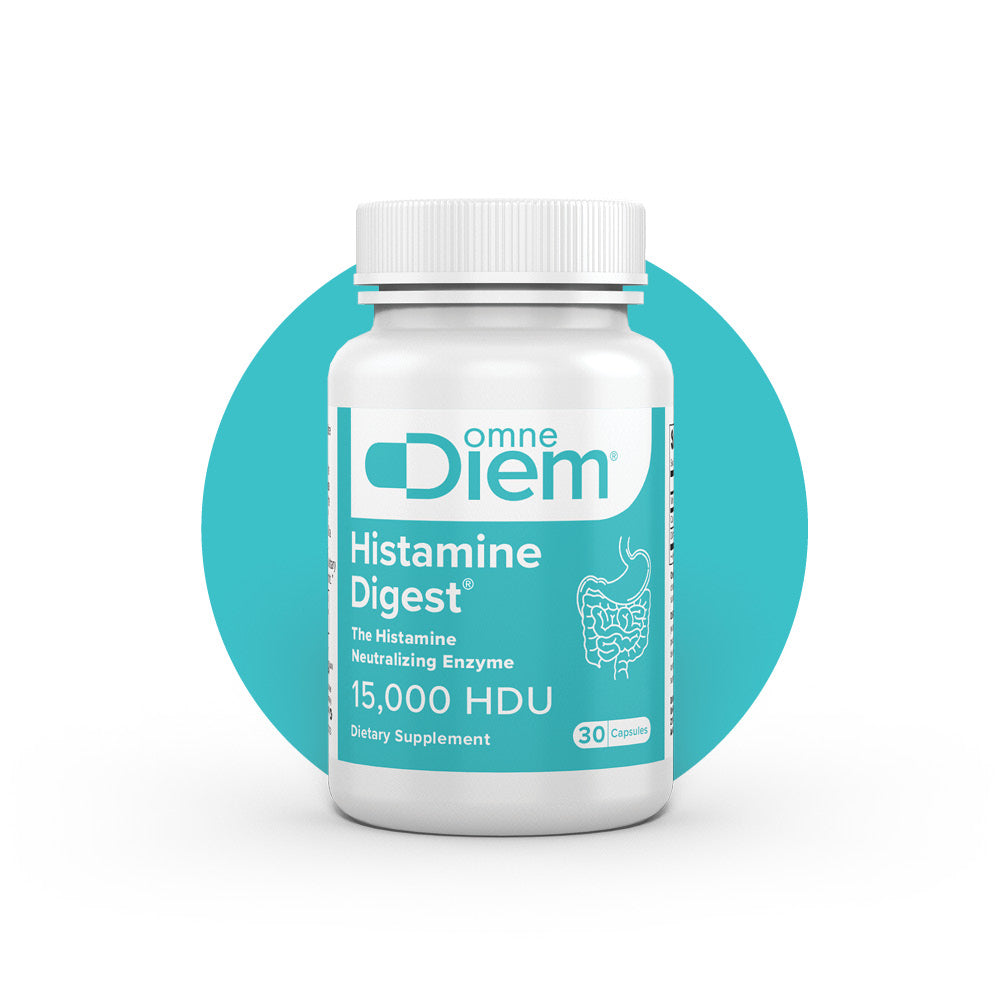
OmneDiem® Histamine Digest®
Designed-release DAO capsule for everyday use — take before high-histamine meals.*
Shop Histamine Digest →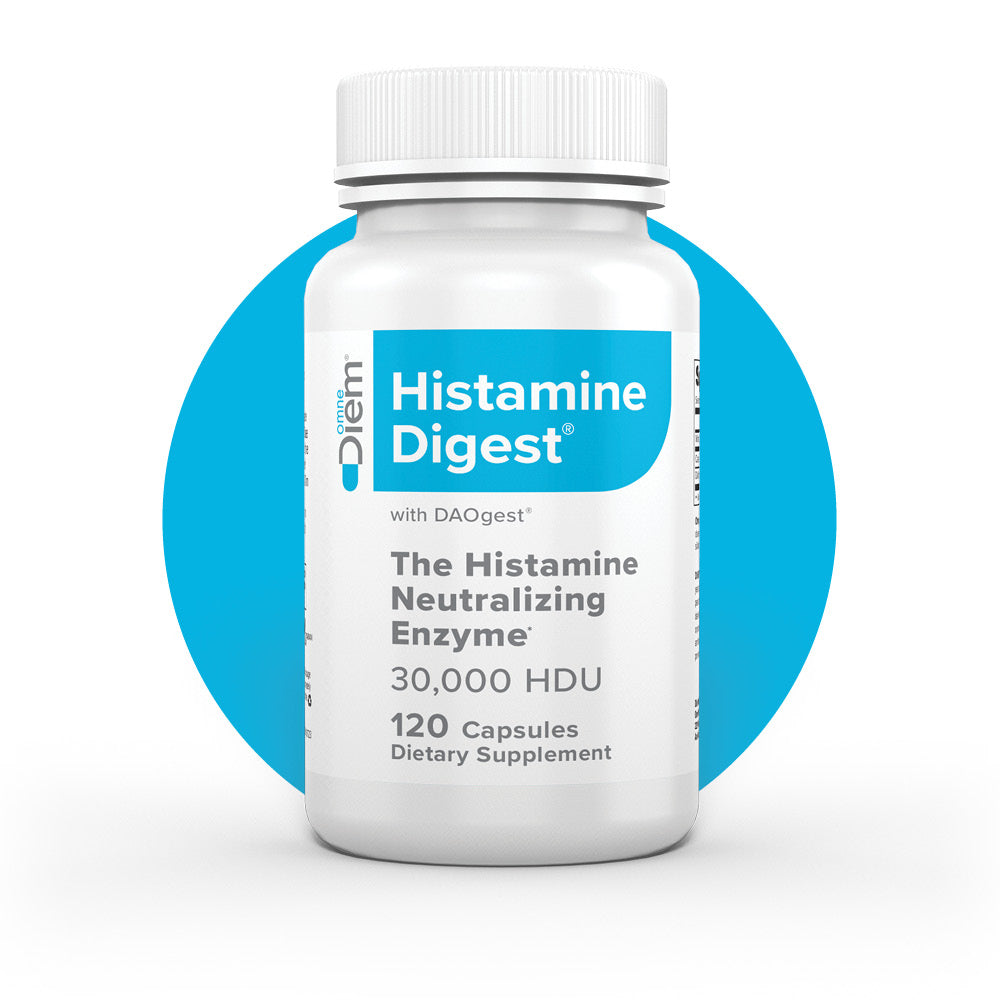
OmneDiem® Histamine Digest® 30,000 HDU
Double-strength DAO in a 120-capsule size for extra support before histamine-rich meals.*
Shop 30,000 HDU →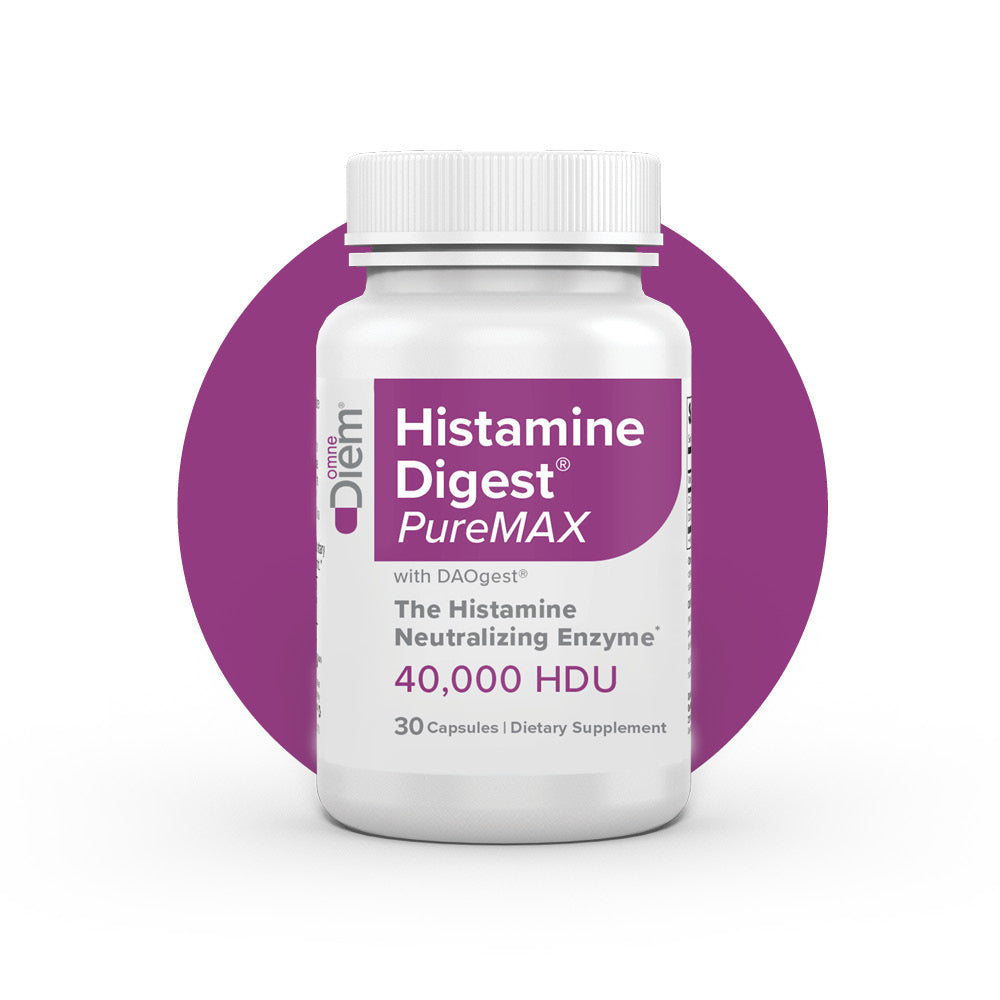
OmneDiem® Histamine Digest® PureMAX
Highest-potency pure DAOgest® formulation for those with greater DAO support needs.*
Shop PureMAX →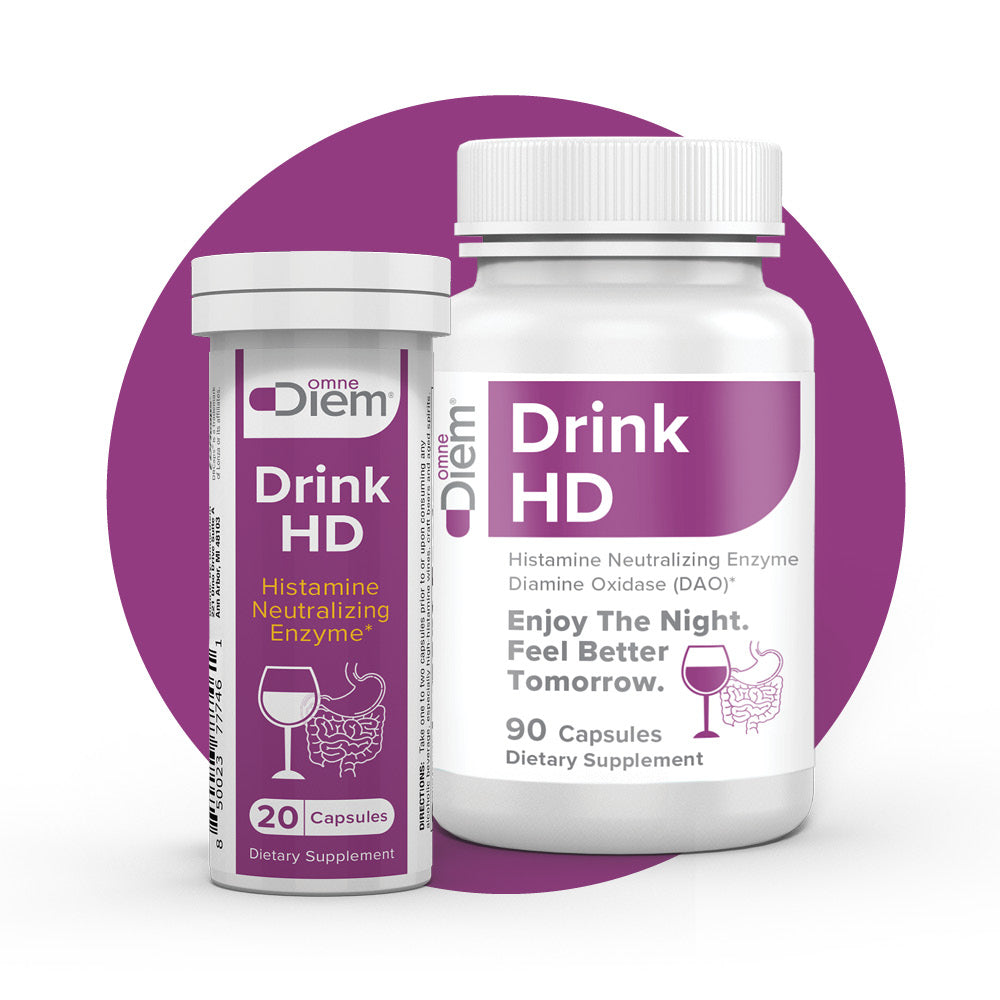
OmneDiem® Drink HD
Portable DAO capsules formulated for before alcoholic beverages — in a 20-capsule travel tube and a 90-capsule bottle.*
Shop Drink HD →Not sure which potency is right for you? Compare the full Histamine Digest® family in one place.*
Shop all DAO →Frequently asked questions
What is the most common high-histamine food?
Aged and fermented foods top the list — aged cheeses, cured meats, and fermented products like sauerkraut and soy sauce. Alcohol, especially red wine and beer, is the most common high-histamine drink and also blocks the DAO enzyme.*
Does cooking reduce histamine in food?
Not reliably. Histamine is heat-stable, so cooking does not break it down the way it destroys many bacteria. The best way to keep histamine low is to eat fresh food promptly and avoid leftovers, which accumulate histamine over time.*
Why does alcohol trigger histamine symptoms?
Alcohol works on all three fronts: fermented drinks contain histamine, alcohol inhibits the DAO enzyme that clears histamine, and its breakdown product acetaldehyde may prompt mast cells to release more histamine.* Drink HD supplies DAO support to take before drinking.*
How do DAO supplements help with high-histamine foods?
DAO (diamine oxidase) is the enzyme your gut uses to break down dietary histamine. OmneDiem® Histamine Digest® supplies supplemental DAO in a designed-release capsule, taken before high-histamine meals to support your body's natural breakdown of food histamine.*
Are OmneDiem DAO supplements vegetarian?
No. The DAO is porcine-derived, so it is not suitable for pork allergies or for vegetarian, vegan, kosher, or halal diets.*
* These statements have not been evaluated by the Food and Drug Administration. OmneDiem® dietary supplements are not intended to diagnose, treat, cure, or prevent any disease or health condition. The food lists provided here are for general educational purposes based on published literature on dietary histamine content and are not exhaustive or individually tailored. Histamine content in foods can vary based on ripeness, storage, preparation method, and individual product formulation. This content does not constitute dietary or medical advice. Individual histamine tolerance varies. Consult your healthcare provider or a registered dietitian for personalized dietary guidance. OmneDiem® Histamine Digest® products contain a porcine-derived ingredient and are not suitable for individuals with pork allergies or those following vegetarian, vegan, kosher, or halal diets.