
What is Histamine Intolerance, DAO Deficiency and MCAS?
This information is for general educational and informational purposes only and is not intended to substitute for professional medical advice, diagnosis, or treatment. If you believe you may be experiencing any of the conditions described below, please consult a qualified healthcare provider.
Histamine Intolerance, DAO Deficiency, and MCAS: What's the Difference?
Histamine intolerance is when the body cannot break down histamine fast enough — usually because the enzyme diamine oxidase (DAO) is low or underactive. DAO deficiency is the most common cause of that clearance problem, not a separate disease. Mast Cell Activation Syndrome (MCAS) is a distinct medical condition in which mast cells release histamine and other inflammatory mediators, and it requires diagnosis by a healthcare provider. All three are frequently confused because they can produce similar experiences.*
OmneDiem® makes DAO enzyme supplements formulated to support the body's natural breakdown of histamine in the gut.* Shop All DAO Enzyme Supplements →
What Is Histamine?
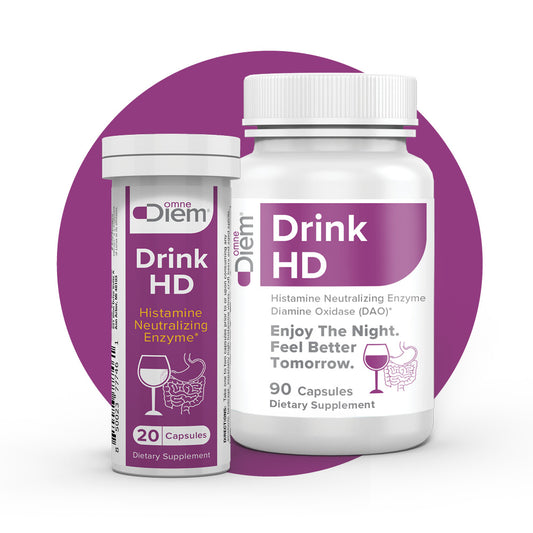
Histamine is a naturally occurring compound found in both the human body and many foods and beverages. In the body, it plays important roles in immune response, digestion, and neurological function. It is also present in elevated amounts in fermented, aged, and cured foods — including red wine, aged cheeses, cured meats, and fermented vegetables such as kimchi — and alcoholic beverages can both contain histamine and affect the body's natural ability to clear it.*
The body relies on two primary enzymes to manage histamine levels: Diamine Oxidase (DAO), which works mainly in the digestive tract to break down histamine from food and drink, and Histamine N-Methyltransferase (HNMT), which manages histamine inside cells. When these systems work well, histamine is naturally regulated. When they do not, histamine can accumulate — and that is where these three distinct concepts come in.*
How Histamine Builds Up in the Body: The Bucket Analogy
A helpful way to picture histamine is as water filling a bucket. It fills from several sources at once — ingested histamine from food and drink, histamine released by the body, allergens, and mast cell activation — while the DAO enzyme works in the gut to break histamine down. As long as clearance keeps up with the inflow, the bucket stays below the rim and the body stays comfortable. When DAO activity is low (DAO deficiency) or the inflow is high, excess histamine accumulates and the bucket can overflow past your personal tolerance threshold — the point at which many people report noticing effects. Because it is a threshold, the same food may be fine in small amounts but not in large ones.*
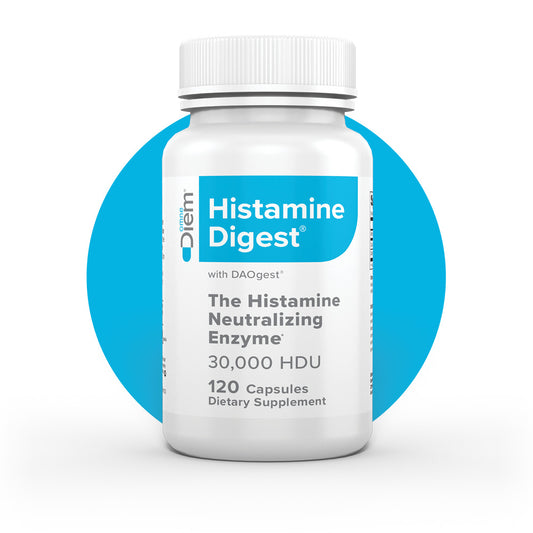
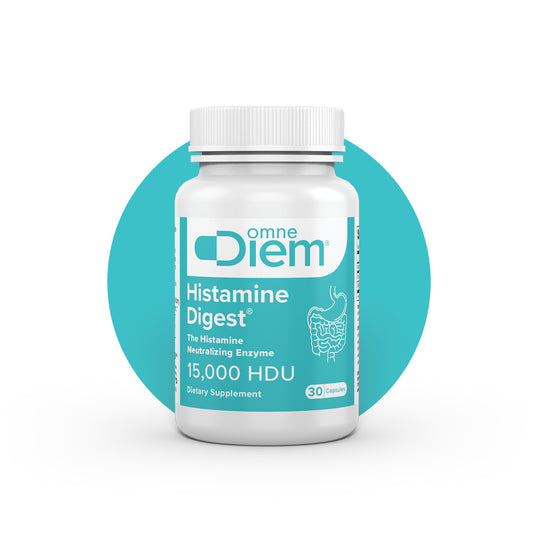
OmneDiem® Histamine Digest® supplies supplemental DAO to support the body's natural histamine breakdown in the gut — in the analogy, helping clearance keep up with what you consume.*
Shop Histamine Digest® 30,000 HDU
Histamine Intolerance (HIT): A Clearance Problem
Histamine intolerance — sometimes called histamine sensitivity — is generally understood in the peer-reviewed research literature as a mismatch between the amount of histamine entering or being produced in the body and the body's capacity to break it down.* It is not a true allergy. Instead, the body has difficulty degrading histamine, often due to a deficiency or reduced activity of the enzyme Diamine Oxidase (DAO), which breaks it down in the gut. When DAO is not working properly, histamine can build up, triggering responses that mimic an allergic reaction.*
For many people, the histamine load comes primarily from food-derived sources due to low DAO activity. Histamine intolerance is dose-dependent — smaller amounts of histamine may be tolerated while larger amounts may provoke a response — and it is typically linked to what is consumed.*
Common areas where histamine sensitivity may be experienced include the digestive tract, skin, sinuses, cardiovascular system, and neurological function.* These experiences are variable, may seem unrelated to one another, and can easily be mistaken for other conditions.*
Some people who suspect a food-related histamine-clearance issue explore DAO supplementation in consultation with their provider. Explore Histamine Digest® 30,000 HDU →
This content is educational only and does not constitute a diagnosis. Always consult a healthcare provider to discuss your individual health history.
DAO Deficiency: The Enzyme at the Center of Histamine Intolerance
The body naturally produces the DAO enzyme, but several factors can reduce its production or activity, including genetics, certain medications, alcohol consumption, and imbalances in gut health.*
DAO is the primary enzyme that degrades extracellular histamine and is mainly responsible for its breakdown in the digestive tract. When DAO is insufficient, histamine from dietary sources — including aged foods, fermented products, and certain fruits and vegetables — may accumulate in the body.* For this reason, DAO deficiency is understood as a contributing factor to histamine sensitivity, not a separate disease.*
Serum DAO activity testing is available but has limited reliability, and a normal result does not necessarily rule out histamine sensitivity. If you suspect DAO deficiency may be relevant to your experience, consult a qualified healthcare professional who can assess your individual situation.
Supporting the body's natural DAO enzyme activity through dietary supplementation is one approach some individuals explore with their providers.* OmneDiem® Histamine Digest® supplies Diamine Oxidase (DAO) to support the body's natural histamine breakdown process in the gut.*
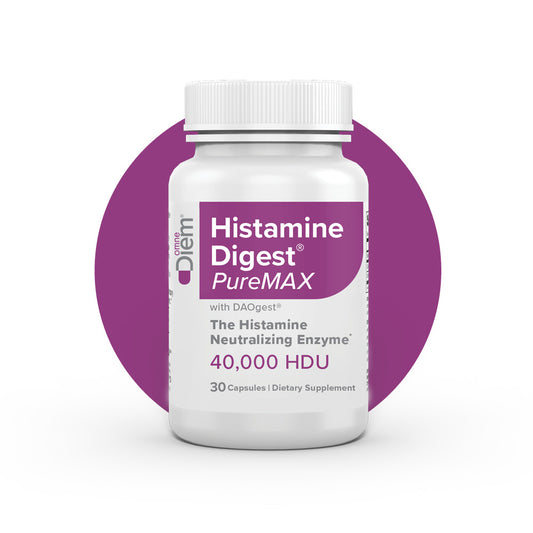
For a higher-potency, single-ingredient option try Histamine Digest PureMax.
*These products are not intended to diagnose, treat, cure, or prevent any disease or health condition.
MCAS (Mast Cell Activation Syndrome): A Different Mechanism
Mast Cell Activation Syndrome (MCAS) is a condition distinct from histamine intolerance, though the two share overlapping characteristics and are frequently confused. Understanding the difference matters — and it requires working with a qualified medical provider for proper evaluation.*
Histamine intolerance is driven primarily by histamine and is usually linked to a deficiency in the DAO enzyme or impaired HNMT activity. MCAS, by contrast, stems from dysregulated mast cell activity and involves histamine and other mediators, including tryptase, leukotrienes, and prostaglandins. Researchers have directly compared the two conditions to help clarify how they differ.*
Mast cells are tissue-resident immune cells that live in the skin, gut, lungs, sinuses, and around blood vessels and nerves. They normally release inflammatory mediators in response to genuine threats. In MCAS, they may become hyperreactive and release these mediators in response to triggers that would not normally provoke a reaction.*
Histamine intolerance is generally assessed from symptom history, DAO measurement, or an elimination diet. MCAS assessment is more complex and may involve mediator panels and additional clinical evaluation.* MCAS is a medical condition that requires diagnosis and management by a qualified healthcare provider. It is beyond the scope of dietary supplements to treat, cure, or prevent MCAS or any other disease.*
People with MCAS tend to have sensitivities beyond histamine-containing foods. If mast cells are not broadly overreactive, some individuals find that supporting histamine breakdown — for example with a DAO enzyme plus cofactor formula — may be part of their overall approach, always in consultation with a practitioner.*
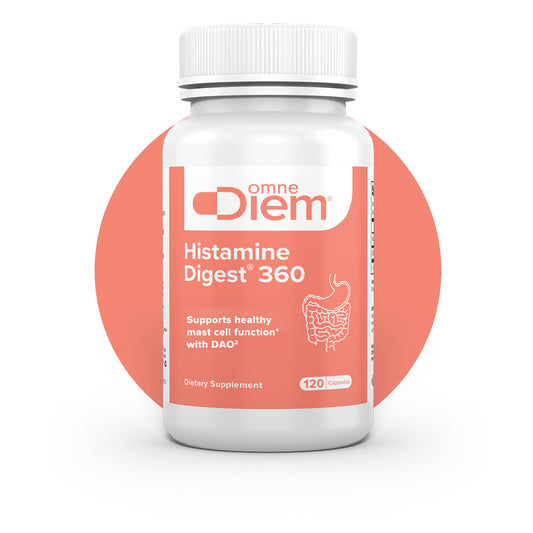
Explore Histamine Digest® 360 to support healthy Mast Cell function
Histamine Intolerance vs. DAO Deficiency vs. MCAS: Side-by-Side
| At a glance | Histamine IntoleranceHIT | DAO DeficiencyThe common cause | MCASDistinct condition |
|---|---|---|---|
| What it is | Difficulty clearing histamine faster than it enters the body* | Low or reduced activity of the DAO enzyme — a cause, not a separate disease* | A medical condition of dysregulated mast cell activity* |
| Main driver | Histamine | Insufficient DAO enzyme | Histamine plus tryptase, leukotrienes, prostaglandins |
| Typical trigger | Histamine-rich foods and drinks (dose-dependent)* | Genetics, medications, alcohol, gut imbalance* | Broad triggers beyond food |
| How it's assessed | Symptom history, DAO measurement, elimination diet | Serum DAO testing (limited reliability) | Mediator panels and clinical evaluation |
| Requires a doctor? | Recommended | Recommended | Yes — diagnosis & management by a provider* |
Shop OmneDiem® DAO Enzyme Supplements
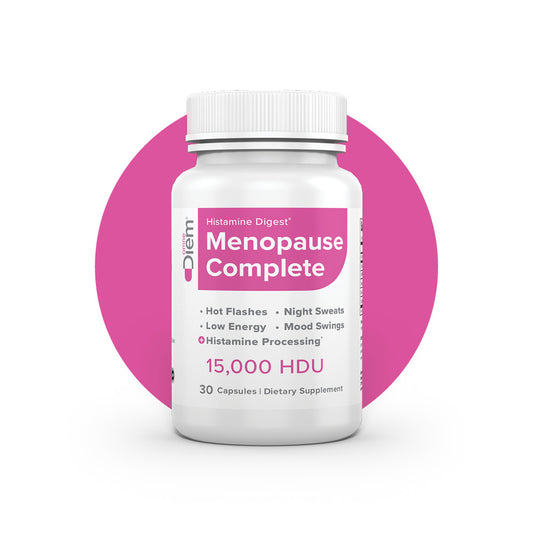
All OmneDiem® Histamine Digest® products use a naturally derived, porcine-sourced DAO enzyme in a designed-release capsule that activates in the small intestine where dietary histamine is processed.
Always consult your healthcare provider before beginning any new supplement.*
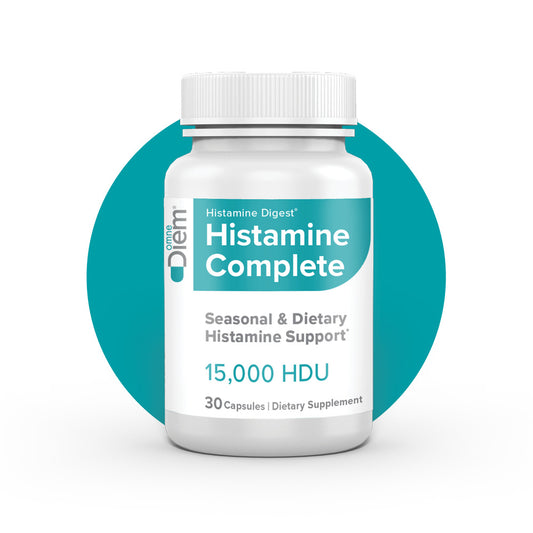
View All DAO Enzyme Supplements by OmneDiem →
Frequently Asked Questions
Is histamine intolerance the same as a food allergy?
No. A food allergy involves an immune (IgE) reaction, while histamine intolerance is a clearance problem — the body cannot break histamine down fast enough, often due to low DAO activity. It is dose-dependent, meaning small amounts may be tolerated while larger amounts provoke a response.*
Is DAO deficiency a disease?
No. DAO deficiency describes low or reduced activity of the DAO enzyme. It is understood as a contributing factor to histamine sensitivity rather than a separate disease.*
What is the difference between histamine intolerance and MCAS?
Histamine intolerance is driven primarily by histamine and is often linked to low DAO levels or impaired HNMT activity. MCAS is a distinct medical condition in which mast cells release histamine plus other mediators such as tryptase, leukotrienes, and prostaglandins, and it requires diagnosis and management by a healthcare provider.*
Can a DAO supplement help with histamine intolerance?
Some individuals explore DAO enzyme supplements to support the body's natural breakdown of dietary histamine in the gut, in consultation with their provider.* DAO supplements are not intended to diagnose, treat, cure, or prevent any disease.
View All DAO Enzyme Supplements by OmneDiem →
How is DAO deficiency tested?
Serum DAO activity testing is available but has limited reliability; a normal result does not necessarily rule out histamine sensitivity. A qualified healthcare professional can assess your individual situation.
* These statements have not been evaluated by the Food and Drug Administration. OmneDiem® dietary supplements are not intended to diagnose, treat, cure, or prevent any disease or health condition, including histamine intolerance, DAO deficiency, or Mast Cell Activation Syndrome. The information provided here is for general educational and informational purposes only, does not constitute medical advice, and should not be used as a substitute for consultation with a qualified healthcare professional. Individual results may vary. If you experience symptoms that concern you, consult a qualified healthcare provider. Not for use during pregnancy or breastfeeding without prior consultation with your healthcare provider. OmneDiem® Histamine Digest® products contain a porcine-derived ingredient and are not suitable for individuals with pork allergies or those following vegetarian, vegan, kosher, or halal diets. Keep out of reach of children.